Hours of Operation
Monday - Friday: 8:00 a.m. - 4:30 p.m.
Your First Step Toward Back and Neck Relief
Back and neck pain can turn simple daily tasks into overwhelming challenges, affecting your ability to walk, work, or enjoy life. As a premier regional destination for spine care, the MemorialCare Back & Neck Health Center at Long Beach Medical Center proudly serves Long Beach and the broader LA and Orange County communities. Our fully coordinated program connects you with a dedicated team of board-certified spine surgeons, physiatrists, pain specialists, physical therapists, and patient navigators. Working together, we create a seamless care plan tailored to you, offering everything from advanced non-surgical treatments to complex spine procedures. Our Patient Pathway Navigator can help guide you at 562-933-4014.
Common Conditions
For the more than 50 million people in the U.S. living with neck or back pain, getting the right diagnosis and care can make a meaningful difference. Our specialists treat a wide range of spine, back, and neck conditions, including:
|
|
Non-Surgical Treatments
Many spine conditions can be treated without surgery. At our Back & Spine Health Center, we create personalized treatment plans to help relieve pain, improve movement, and support your daily life. Your care plan may include:
Surgical Treatments
If non-surgical treatments no longer provide enough relief, surgery may be an option to help reduce pain, restore function, and improve quality of life. Our spine surgeons offer advanced procedures using minimally invasive techniques, advanced imaging, and robotic-assisted technology for select cases. Your surgical treatment may include:
Understanding Back & Neck Pain and Finding Relief
Join MemorialCare’s spine specialists to uncover the root causes of neck and back pain, learn how your symptoms map to specific conditions, and explore the latest treatment breakthroughs.
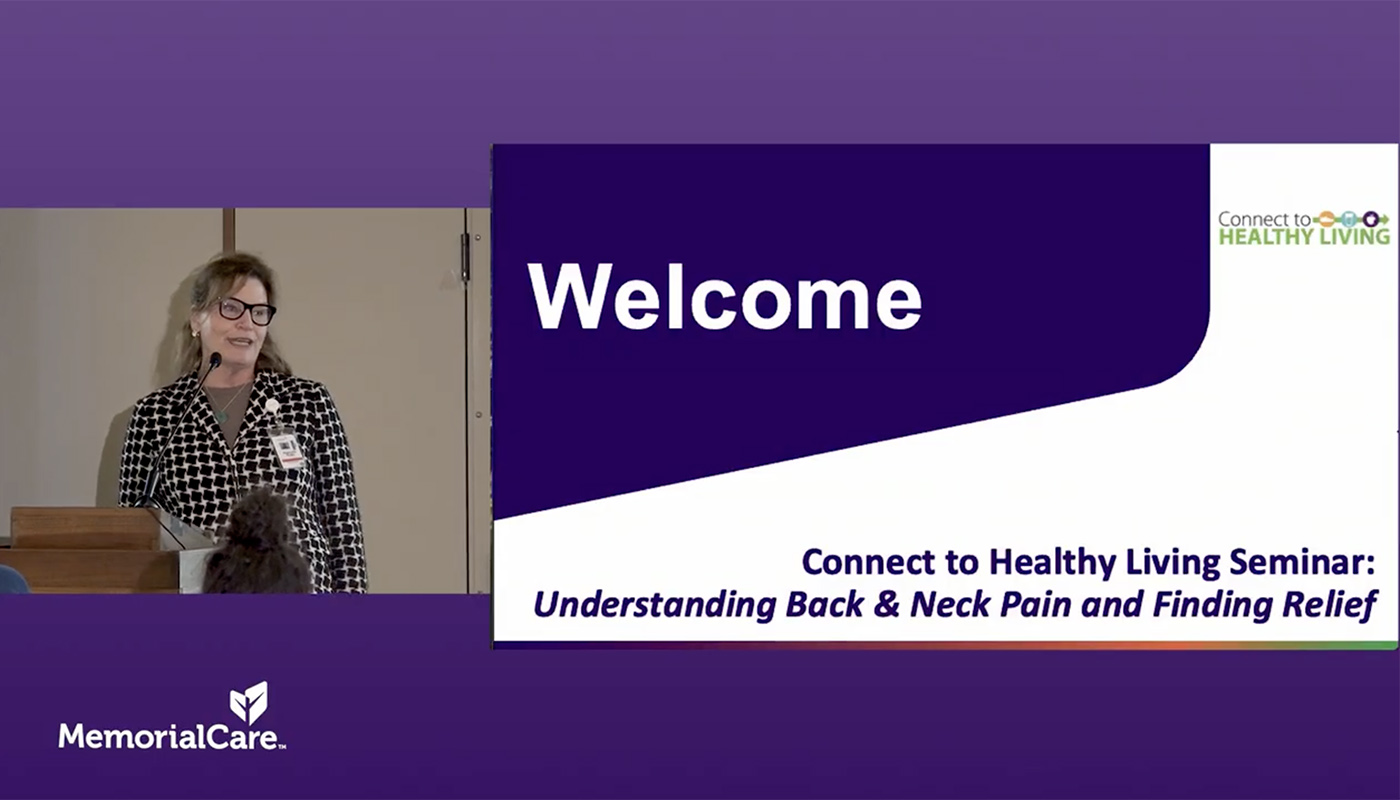
Connect to Healthy Living Seminar
Watch and learn about back and neck pain relief with Drs. Andrew Hanna and Amandeep Bhalla.
Frequently Asked Questions
The center evaluates and treats a wide range of spine and musculoskeletal conditions, including herniated discs, spinal stenosis, sciatica, scoliosis, degenerative disc disease, chronic back pain, neck pain, pinched nerves, spinal arthritis, spine fractures, spinal deformities, and injuries affecting the cervical, thoracic, or lumbar spine.
The Back & Neck Health Center is ideal for:
- Adults 55–79, especially those with chronic or acute back, neck, or joint pain
- Patients who haven’t found relief through conservative treatments
- Individuals seeking second opinions or exploring surgical options
- Workers’ compensation and employer-referred patients
You should consider seeing a Back & Neck Health Center specialist if your pain lasts longer than two to four weeks, keeps returning, or makes it harder to get through everyday activities such as walking, sleeping, driving, exercising or working.
It’s also important to seek medical care if you have numbness, tingling, weakness in your arms or legs, trouble walking or keeping your balance, or pain that travels into your arms or legs.
Pain that starts after a fall, sports injury or car accident should be evaluated promptly. Early diagnosis and treatment can help keep symptoms from getting worse and may reduce the need for more invasive care later on.
Back pain should be evaluated immediately if it follows major trauma or is associated with severe weakness, loss of balance, fever, unexplained weight loss, bowel or bladder changes, or numbness around the groin area. Persistent pain that disrupts sleep, worsens over time, or limits daily activities also deserves medical attention. While many cases improve with conservative care, certain symptoms may indicate nerve compression, spinal instability, infection, or other serious conditions.
Most patients do not need surgery.
Many spine conditions improve with conservative treatment such as physical therapy to improve strength and flexibility, anti-inflammatory medications, muscle relaxants, posture and ergonomic training, supervised exercise programs, epidural steroid injections, nerve blocks, heat or cold therapy, and interventional spine procedures.
Surgery is generally considered only when symptoms persist despite nonsurgical care, pain significantly affects quality of life, or there is evidence of nerve compression causing weakness, balance issues, or loss of function.
A spine specialist can help determine whether surgery is appropriate based on imaging, symptoms, and response to treatment.
Your first visit typically includes a detailed discussion of your symptoms, medical history, lifestyle factors and previous treatments. Your provider may also perform a physical exam to evaluate your strength, reflexes, posture, flexibility and nerve function. Any existing imaging may be reviewed, and, if needed, additional tests such as X-rays, MRI or CT scans may be recommended. Based on the findings, your care team will discuss treatment options and create a personalized care plan.
The Back & Neck Health Center also offers:
- In-person and virtual consultations
- Dedicated nurse navigator to help coordinate your care journey
- On-site imaging and diagnostics
- Physical therapy and rehabilitation
- Patient education and support resources
Not every patient requires advanced imaging. However, MRI, CT scans, or X-rays may be recommended if symptoms suggest nerve compression, spinal instability, fractures, disc problems, or structural abnormalities. MRI is commonly used to evaluate discs, nerves, and soft tissues, while CT scans provide detailed views of bone structures. Imaging helps specialists identify the underlying cause of pain and guide treatment decisions.
Find a Provider Near You
Located throughout Orange County and Los Angeles County, MemorialCare-affiliated physicians are locally and nationally recognized in their area of expertise. We've made it easy to find a quality healthcare provider right in your own backyard.