Published on Sept. 18, 2026
For nearly a year, Tim Lott couldn't understand what was happening to his body.
The retired hospice chaplain had survived a heart attack, undergone multiple cardiac procedures and received a pacemaker. Yet instead of feeling better, he found himself growing weaker. His face became swollen, his eyes constantly watered, and he felt dizzy, short of breath and exhausted. Eventually, the symptoms became so severe that he was forced to retire five months earlier than planned.
"I knew something was wrong," Tim said. "I just couldn't figure out what it was."
What followed was a journey that brought Tim across the country and led to the discovery of a rare condition that even many health care professionals never encounter. Through seamless collaboration among specialists at the MemorialCare Heart & Vascular Institute at Long Beach Medical Center, Tim finally received a diagnosis, treatment and ultimately a second chance at life.
A Medical Mystery After a Heart Attack
Tim's cardiac journey began on Oct. 3, 2023, when he suffered a heart attack while living in Florida. During his hospitalization, he experienced multiple cardiac events and ultimately required additional intervention, including a pacemaker with traditional transvenous leads.
For a while, everything seemed to be going well.
Then, about a year later, subtle symptoms began to appear. What started as dizziness and shortness of breath gradually progressed into persistent facial swelling, pressure in his head and overwhelming fatigue. Despite visits to multiple specialists and extensive testing, no one could pinpoint the cause.
"I went to heart doctors, eye doctors and even allergy specialists," Tim said. "Everyone was trying to help, but nobody could find the answer. It got to the point where I had to retire five months early despite loving my job as a hospice chaplain."
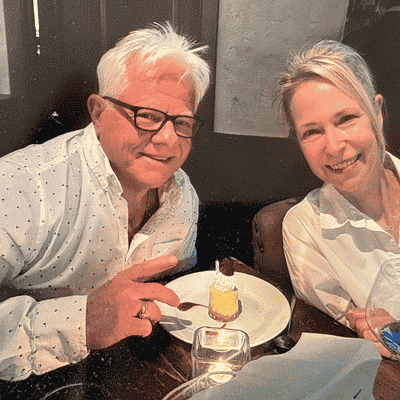
As his symptoms worsened, Tim made a life-changing decision.
He sold his home in Florida and relocated to California to be with his longtime partner, Michelle.
"We had always planned to be together," Tim said. "At the time, I honestly didn't know how much longer I had. Michelle encouraged me to move out to be with her, and that decision changed everything."
Searching for Answers Beyond Traditional Heart Disease
After moving to Southern California, Michelle helped Tim research cardiologists experienced in complex heart conditions and who might be able to help him. After looking at multiple hospitals and cardiologists, Tim established care with Kevin Shah, M.D., director, Heart Failure Outreach, MemorialCare Heart & Vascular Institute, Long Beach Medical Center.
From the beginning, Dr. Shah noticed something unusual.
"When Tim first came to see me, he had a history of heart disease but was describing symptoms that didn't fit the typical pattern," Dr. Shah said. "He was experiencing fullness in his head, pressure and symptoms that worsened when he bent over. It was clear something else was going on."
Dr. Shah monitored Tim closely over several follow-up visits. As Tim's symptoms progressively worsened, Dr. Shah grew concerned about a potential obstruction restricting blood flow from his head and upper body, and promptly ordered a CT scan.
The results revealed something unexpected. Rather than finding a tumor or external mass, imaging showed Tim had developed superior vena cava syndrome. The condition occurs when the superior vena cava, the large vein responsible for returning blood from the head, neck and upper body to the heart, becomes narrowed or blocked.
"The findings were incredibly unique," Dr. Shah said. "Many cases of superior vena cava syndrome are caused by compression from outside the vein, often due to a tumor. In Tim's case, the narrowing developed from scar tissue that formed around the pacemaker leads inside the vein. It was an extremely uncommon presentation of the condition."
For Tim, the diagnosis brought unexpected relief.
"I had never heard of superior vena cava syndrome, even after working in health care for years," Tim said. "When I looked it up, I realized it was serious. But honestly, I was relieved because we finally had an answer."
Because superior vena cava syndrome related to pacemaker leads is uncommon, diagnosing and treating it often requires close collaboration among multiple specialists. At Long Beach Medical Center, that expertise was available within one integrated cardiovascular program, allowing Tim's physicians to quickly coordinate a treatment plan.
Treating a Rare Case of Superior Vena Cava Syndrome
Recognizing the complexity of the case, Dr. Shah assembled a multidisciplinary team that included Michael Y. Liu, M.D., vascular and interventional radiologist, and Mark Y. Lee, M.D., medical director, Electrophysiology, MemorialCare Heart & Vascular Institute at Long Beach Medical Center.
Together, the physicians developed a treatment plan designed to address both the blocked vein and the pacemaker system contributing to the problem.
In January 2026, Dr. Liu performed a procedure called superior vena cava angioplasty to open the narrowed vein, which provided temporary relief. During the intervention, Dr. Liu used a balloon to widen the tight vein and restore blood flow. Dr. Lee then performed a lead extraction procedure to safely remove the traditional pacemaker leads and battery.
Because removing long-standing pacemaker leads can carry significant risks, the procedure required extensive planning and coordination.
"I was definitely nervous," Tim said. "I knew there were potential complications, and I understood the risks. But I trusted the team completely. They had confidence, and that gave me confidence."
After the leads were removed, Dr. Lee implanted a leadless pacemaker, a newer technology that eliminates the need for traditional wires extending through the veins. In fact, MemorialCare Heart & Vascular Institute at Long Beach Medical Center was one of the first centers to implant a leadless pacemaker into the right atrium, the top chamber of the heart, in South Los Angeles County back in January 2025.
The results were dramatic.
"Tim's case presented a unique challenge because we needed to safely remove the existing pacemaker system while preserving reliable heart rhythm support,” Dr. Lee said. “The atrial leadless pacemaker allowed us to eliminate the need for wires within the vein, reducing the risk of further complications. Technology to pace the atrium using a leadless device only became available within the past 2 years, so we are delighted that Tim received the right device at the right time.”
For the first time in months, Tim felt hopeful.
"Almost immediately, I felt better," he said. "I hadn't felt that good in years."
When Superior Vena Cava Syndrome Returned
Unfortunately, the improvement didn't last.
Several months later, Tim began noticing familiar symptoms returning. Knowing that restenosis, or re-narrowing of the vein, was a possibility, Dr. Shah ordered follow-up imaging. The scans confirmed that the superior vena cava had begun narrowing again.
Rather than waiting for the condition to worsen, the team quickly moved into action.
Dr. Shah referred Tim back to Dr. Liu, who recommended a second angioplasty along with placement of a specialized vascular stent to help keep the vein permanently open.
The procedure took place on July 10, 2026.
"The team took the time to explain everything," Tim said. "Dr. Liu made me feel comfortable from the very beginning. Everyone knew how unique the situation was, but they came together with a plan."
Using advanced minimally invasive techniques, Dr. Liu precisely navigated the scarred vessel, expanding the vein, and deploying a specialized venous stent to restore blood flow to his heart.
"When the vein narrowed again after the initial procedure, we knew we needed a more durable long-term solution,” Dr. Liu said. “The stent acts as a scaffold to keep the vein open and maintain healthy blood flow. Given the rarity of Tim's condition, achieving this outcome was particularly meaningful for our team."
Since the stent placement, Tim's symptoms have resolved, and he continues to undergo routine imaging to monitor his progress.
Back to Living Life After Treatment
Today, Tim says he feels better than he has in years. The facial swelling is gone. His breathing has improved. The fatigue and dizziness that once dominated his days have disappeared. Most importantly, he has returned to the activities he enjoys.
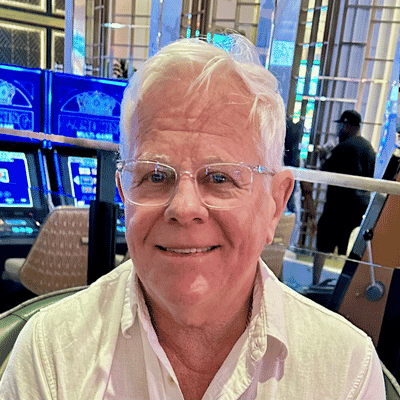
"I'm riding my e-bike again, going down to the beach and enjoying life," Tim said. "I finally look and feel like myself again."
Reflecting on his experience, Tim remains grateful not only for the successful procedures, but also for the persistence of the cardiac care team at MemorialCare Heart & Vascular Institute.
"What amazes me most is that after months of searching for answers elsewhere, the team here was able to figure it out and treat me so quickly," he said. "Even though it was something they don't see every day, they worked together, trusted each other's expertise and never stopped trying to find the cause."
For Dr. Shah, Tim's story represents the power of coordinated specialty care.
"This was a rare and challenging case, but it demonstrates the importance of multidisciplinary care," Dr. Shah said. "Every member of the team brought specialized expertise, and the communication between all of us was seamless."
For Tim, that coordinated approach made all the difference.
"I don't think doctors hear 'thank you' enough," he said. "Every person on the team played a role in giving me my life back. If I had stayed where I was, I honestly don't know what would have happened. MemorialCare gave me a second chance."
Now 68, Tim looks toward the future with optimism. He continues routine monitoring and follow-up imaging, but instead of worrying about what comes next, he's focused on enjoying the life he nearly lost.
Medically Reviewed By:
Kevin Shah, M.D., cardiologist, program director, Heart Failure Outreach, MemorialCare Heart & Vascular Institute, Long Beach Medical Center
Mark Y Lee, M.D., medical director, Electrophysiology, MemorialCare Heart & Vascular Institute, Long Beach Medical Center
Micheal Y Liu, M.D., vascular and interventional radiologist, MemorialCare Heart & Vascular Institute, Long Beach Medical Center
About the Authors:
Kevin Shah, M.D., cardiologist, program director, Heart Failure Outreach, MemorialCare Heart & Vascular Institute, Long Beach Medical Center
Dr. Shah, is a fellowship-trained, board-certified cardiologist who specializes in advanced heart failure & transplant cardiology. He also serves as MHVI Program Director, Heart Failure Outreach to bring patient care and expertise to serve Southern California’s diverse communities.
Mark Y Lee, M.D., medical director, Electrophysiology, MemorialCare Heart & Vascular Institute, Long Beach Medical Center
Dr. Lee is a fellowship trained, board-certified cardiac electrophysiologist with Memorial Cardiology Medical Group in Long Beach and serves as the Medical Director, Electrophysiology at the MHVI at Long Beach Medical Center.
Micheal Y Liu, M.D., vascular and interventional radiologist, MemorialCare Heart & Vascular Institute, Long Beach Medical Center
Dr. Liu is a fellowship-trained, board-certified vascular and interventional radiologist with the MemorialCare Medical Group at Long Beach Medical Center.