Published on Sept. 28, 2026
When Donald Newman collapsed from sudden cardiac arrest at home, his wife's quick action with CPR helped keep him alive long enough for emergency responders and cardiac specialists to take over.
One summer morning, Donald Newman was getting ready for an early Zoom call at home when something suddenly felt wrong. He noticed unexplained discomfort, followed by confusion and intense sweating that made no sense.
Within moments, Donald collapsed and went into cardiac arrest.
Donald had no known history of severe heart disease. Three years earlier, a routine test at another clinic had revealed a small blockage, but it required no intervention. He stayed active, ate well and felt healthy — confidence that made the symptoms puzzling rather than immediately alarming.
“I had no idea what was going on,” Donald said. “All I knew was that something was deeply wrong.”
Cardiac arrest can happen even in people who appear healthy. In many cases, it is caused by a sudden electrical malfunction in the heart that prevents it from beating effectively. Without blood flow, oxygen cannot reach the brain and other vital organs, making immediate treatment critical.
The Power of Bystander CPR
Donald wasn't alone when he collapsed.
His wife immediately recognized that something was seriously wrong. She called 911 and began chest compressions, relying on the basic steps she remembered despite never having performed cardiopulmonary resuscitation (CPR) before.
Outwardly calm, she continued compressions until paramedics arrived within minutes and took over life-saving efforts. Donald was rushed to MemorialCare Long Beach Medical Center, where emergency department teams were already preparing for his arrival.
Every minute without CPR dramatically lowers the chance of survival. Immediate bystander CPR helps keep oxygen-rich blood flowing to the brain and vital organs until emergency responders can take over care.
"When someone experiences cardiac arrest, what happens in those first few minutes can make all the difference,” said Khiet Hoang, M.D., medical director, Emergency Cardiac Services, MemorialCare Heart & Vascular Institute, Long Beach Medical Center. "Starting CPR immediately can help maintain blood flow to the brain and other vital organs until emergency medical teams arrive."
By the time Donald arrived at Long Beach Medical Center, his odds of survival had already improved because his wife took action.
Heart Attack vs. Cardiac Arrest
Cardiac arrest is often confused with a heart attack, but the two are not the same.
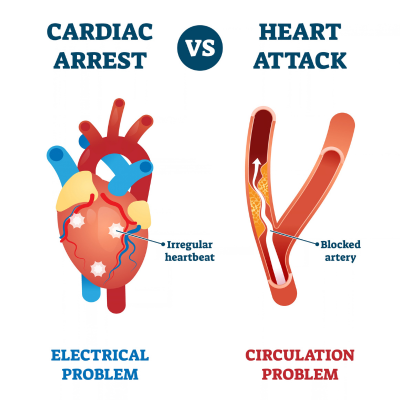
A heart attack occurs when blood flow to part of the heart muscle is blocked, preventing oxygen from reaching the tissue. Cardiac arrest occurs when the heart's electrical system malfunctions, causing the heart to stop beating effectively.
"A heart attack is a circulation problem caused by a blockage in a coronary artery, while cardiac arrest is an electrical problem that causes the heart to stop beating effectively," Dr. Hoang explained. "A heart attack can sometimes trigger cardiac arrest, which is what happened in Donald's case."
Without circulation, irreversible brain injury can begin within minutes. That's why calling 911, starting CPR and using an automated external defibrillator (AED), if available, are so important.
Specialized Cardiac Care When Every Minute Matters
After being stabilized in the emergency department, Donald was admitted for further evaluation and treatment.
Doctors determined that a major blockage had triggered a heart attack, which ultimately led to his cardiac arrest.
To treat the blockage, a stent was placed in one of his arteries to increase blood flow to the heart. To place the stent, a minimally invasive procedure called percutaneous coronary intervention was performed. During the procedure, physicians insert a thin, flexible tube called a catheter into a blood vessel and guide it to the blocked artery. The catheter has a balloon at the end, which inflated to open the narrowed artery and place the stent to help keep blood flowing properly.
Donald spent 10 days at Long Beach Medical Center, receiving comprehensive care through the MemorialCare Heart & Vascular Institute.
"Successful outcomes depend on rapid diagnosis, immediate treatment and seamless coordination between emergency physicians, cardiologists, nurses and critical care teams," said Dr. Hoang. "Every minute matters when restoring blood flow and protecting heart function."
The Heart & Vascular Institute at Long Beach Medical Center brings together cardiologists, cardiac surgeons, emergency physicians and highly trained nursing teams to provide coordinated care for complex heart and vascular conditions — from prevention and diagnosis to emergency response and long-term recovery.
Advanced Cardiac Arrest Care Close to Home
Long Beach Medical Center is also designated as an Extracorporeal Cardiopulmonary Resuscitation (ECPR) Receiving Center, one of a limited number of facilities in Los Angeles County equipped to provide this advanced level of cardiac arrest care.
ECPR is used in select cases when conventional resuscitation efforts are not enough. The technology temporarily performs the work of the heart and lungs, allowing medical teams time to address the underlying cause of cardiac arrest.
Although Donald did not require ECPR, having access to advanced cardiac arrest resources and specialized cardiac teams helped ensure he received rapid evaluation and treatment when every minute mattered.
"An ECPR Receiving Center designation reflects a hospital's ability to provide highly specialized cardiac arrest care when every second counts," Dr. Hoang said.
Recovery After Cardiac Arrest
Following his discharge, Donald continued regular follow-up appointments with his cardiology team, initially every four months and now every six months, to monitor his heart health and reduce the risk of future cardiac events.
The experience also changed how he viewed stress.
As Donald learned more about his condition, his care team helped him understand the connection between prolonged stress and cardiovascular health. While he had maintained physical fitness and a healthy diet, the cumulative effects of long-term stress had quietly taken a toll.
“I was fit, and my diet was solid, but the stress had built up without me realizing how much it mattered,” Donald said. “Now I’m intentional about managing it. It’s not optional, lowering my stress levels is part of staying alive.”
Care teams at the MemorialCare Heart & Vascular Institute emphasize that heart health extends beyond procedures and medications. Education, lifestyle changes and long-term monitoring all play a critical role in recovery and prevention.
Knowing the Signs of Cardiac Arrest
When cardiac arrest occurs, everything moves quickly. Someone may collapse without warning, become unresponsive or struggle to breathe, and there is no time to hesitate. While some people experience warning symptoms beforehand, such as chest discomfort, shortness of breath, unusual fatigue, dizziness or nausea, others may have little or no warning at all.
Someone experiencing cardiac arrest may:
- Collapse suddenly
- Become unresponsive
- Stop breathing normally
- Gasp for air
- Lose consciousness
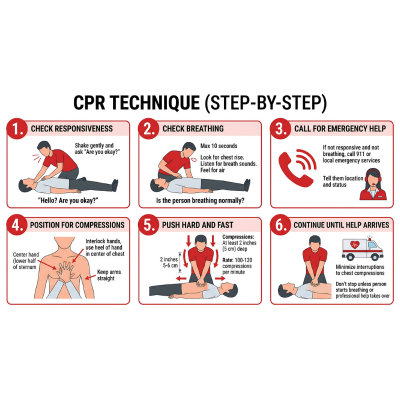
If someone suddenly collapses and is unresponsive, call 911 immediately, begin hands-only CPR and use an AED if one is available.
"People often hesitate because they're afraid they'll do something wrong," said Dr. Hoang. "But when someone is unresponsive and not breathing normally, taking action is almost always better than doing nothing."
That is what Donald’s wife did. Her instinct to act made it possible for paramedics and clinicians at Long Beach Medical Center to continue life-saving care.
A Message for Others
Today, Donald continues to prioritize his heart health with regular checkups, stress management and a renewed focus on overall well-being.
He and his family have also become strong advocates for CPR education and emergency preparedness.
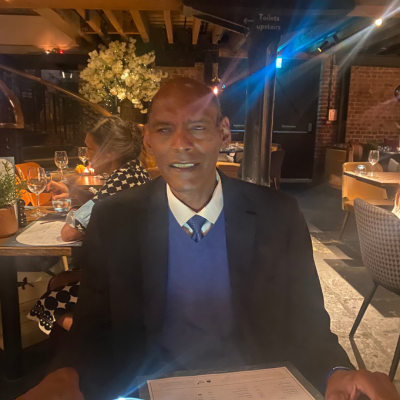
"If there's anything I want people to know, it's that CPR really does save lives," Donald said. "Be intentional about your health, because cardiac arrest can happen to anyone, even if you think you're doing everything right."
For Donald's family, the importance of CPR is now deeply personal. They encourage others to learn hands-only CPR, know where AEDs are located at work and in their communities, talk openly with loved ones about what to do in an emergency and practice, just like a fire drill.
Looking back, Donald knows his story could have ended very differently. Now, Donald hopes his story inspires others to learn CPR, because when an emergency happens, taking action may give someone the chance to come home to their loved ones.
Frequently Asked Questions About Cardiac Arrest and CPR
Cardiac arrest occurs when the heart suddenly stops beating effectively, preventing blood from delivering oxygen to the brain and other vital organs. Without immediate treatment, cardiac arrest can become fatal within minutes.
Call 911 immediately. If the person is unresponsive and not breathing normally, begin hands-only CPR and use an automated external defibrillator (AED) if one is available.
Hands-only CPR involves calling 911 and performing continuous chest compressions in the center of the chest until emergency responders arrive. It can help keep oxygen-rich blood flowing throughout the body during a cardiac emergency.
A heart attack occurs when blood flow to the heart muscle is blocked. Cardiac arrest occurs when the heart's electrical system malfunctions and the heart stops beating effectively. In some cases, a heart attack can trigger cardiac arrest.
Yes. While heart disease is a major risk factor, cardiac arrest can occur even in people who appear healthy and active, which is why recognizing the signs and knowing how to respond is so important.