Published on July 27, 2026
Updated on Aug. 6, 2026
Medically Reviewed By:
Julie A. Schafer, D.O., Family Medicine Physician, MemorialCare Medical Group | Last Reviewed July 2026
Few things say summer in Southern California quite like a day at the beach. Whether your family is planning a day at Alamitos Beach, Mother's Beach, Bolsa Chica State Beach or another Southern California shoreline, a little preparation can help ensure the day is remembered for the right reasons.
While beach days are a fun way to stay active and spend time together, they also come with potential health and safety risks. Too much sun exposure, dehydration, water-related accidents and minor injuries can quickly disrupt your plans if you're not prepared.
The good news? Most beach-related illnesses and injuries can be prevented with a few simple precautions. Use this family-friendly beach day safety checklist to help protect everyone, from toddlers to grandparents, so you can focus on enjoying the surf, sand and sunshine.

Why Should Families Have a Beach Day Safety Checklist?
Key Takeaway: A little preparation can prevent many of the most common beach-related illnesses and injuries, helping families stay safe while enjoying the outdoors.
When families think about packing for the beach, towels, snacks and toys usually make the list. But important health and safety essentials can easily be forgotten.
Creating a beach day safety checklist helps ensure you're prepared for common situations such as sunburn, dehydration, scrapes, stingray or jellyfish stings, and unexpected changes in weather or ocean conditions.
Before heading out, consider the needs of everyone in your group, including young children, older adults and individuals with chronic health conditions who may be more sensitive to heat and sun exposure. Conditions such as asthma, heart disease, diabetes and some autoimmune disorders, as well as certain medications, can increase the risk of heat-related illness.
Why Is Hydration Important During a Beach Day?
Key Takeaway: Hot weather, sun exposure and physical activity can cause dehydration quickly. Encourage older adults and children to drink water regularly throughout the day—even before they feel thirsty.

It's easy to underestimate how much fluid your body loses during a day at the beach. Swimming, walking on sand, playing games and spending time in the sun all increase your body's need for water.
Children are particularly vulnerable because they often become absorbed in play and may not recognize the early signs of dehydration.
Older adults may also face a higher risk because the body's sense of thirst naturally decreases with age, making it easier to become dehydrated without realizing it.
Beach Hydration Checklist
- Pack plenty of water for every family member
- Encourage children to take water breaks throughout the day
- Bring water-rich snacks such as watermelon, oranges, berries and cucumbers
- Take regular breaks in the shade to cool down
- Limit sugary drinks and caffeinated beverages, which may contribute to dehydration
Signs of Dehydration to Watch For
| Early Signs | Serious Signs |
|---|---|
| Dry mouth | Fainting or loss of consciousness |
| Headache | Very little or no urine output |
| Fatigue | Inability to keep fluids down |
| Irritability | Extreme weakness |
If someone begins showing signs of dehydration, move them to a cooler area and encourage fluids right away.
How Can Families Protect Themselves From the Sun?
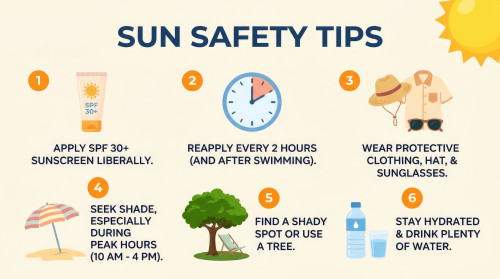
Key Takeaway: Sunscreen, protective clothing, hats and regular shade breaks are some of the most effective ways to reduce the risk of sunburn and heat-related illness.
A healthy dose of sunshine can boost your mood, but too much exposure can lead to painful sunburns and increase long-term skin cancer risk. According to the American Academy of Dermatology, 1 in 5 Americans will develop skin cancer by age 70, making sun protection an important part of every beach day.
Remember, even on cloudy days, ultraviolet (UV) rays can still cause skin damage.
Sun Safety at the Beach Checklist
- Apply a broad-spectrum sunscreen with SPF 30 or higher before arriving at the beach
- Reapply sunscreen every two hours and after swimming
- Wear wide-brimmed hats whenever possible
- Use sunglasses that provide UV protection
- Choose lightweight, sun-protective clothing or rash guards
- Seek shade periodically throughout the day
- Consider planning beach activities outside of peak sun hours whenever possible
Don't Forget These Commonly Missed Areas
Many people remember their arms and shoulders but forget to protect:
- Ears
- Scalp
- Back of the neck
- Tops of feet
- Hands
- Lips
Children often need extra assistance to ensure sunscreen is applied evenly and thoroughly.
How Can Families Stay Safe in the Water?
Key Takeaway: Swim near lifeguards, supervise children at all times and understand local ocean conditions before entering the water.
Ocean conditions can change rapidly, even on seemingly calm days. Waves, tides and currents can create hazardous situations for swimmers of all ages and experience levels.
One of the most important safety measures families can take is choosing a beach with active lifeguard supervision.
Water Safety Checklist
- Swim near staffed lifeguard towers
- Observe warning flags and posted safety advisories
- Keep young children within arm's reach when they're in or near the water
- Designate one responsible adult to actively supervise children
- Stay within your swimming abilities
- Take breaks if you become tired
- Teach children to ask permission before entering the water
What Should Families Know About Rip Currents?
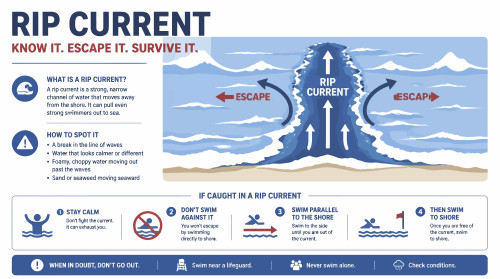
Rip currents are powerful channels of water that move away from shore.
If caught in one, remember: Float → Swim Parallel → Signal for Help
It's important to:
- Stay calm
- Avoid swimming directly against the current
- Swim parallel to the shoreline until you are out of the current
- Then make your way back to shore
- Alert a lifeguard if you need assistance
Teaching these basics before visiting the beach can help family members feel more confident in the water. Before visiting the beach, consider checking local surf and rip current forecasts.
What Should Be Included in a Beach First Aid Kit?
Key Takeaway: A well-stocked first aid kit can help families quickly manage minor injuries and common beach-related health concerns.
While no one plans for accidents, minor cuts, scrapes and stings often happen during active beach days.
Having supplies on hand can help you address issues promptly and comfortably.
Beach First Aid Essentials
- Adhesive bandages
- Gauze pads
- Medical tape
- Antiseptic wipes
- Antibiotic ointment
- Tweezers
- Aloe vera gel
- Instant cold packs
- Pain relievers appropriate for adults and children
- Emergency contact information
Common Beach Injuries
Stingray Injuries
Stingrays are commonly found along Southern California shorelines and can accidentally sting beachgoers who step on them in shallow water. To help reduce your risk, do the "stingray shuffle"—shuffle your feet along the sandy bottom rather than taking large steps when entering or exiting the ocean. This movement alerts stingrays to your presence and gives them a chance to swim away.
If a sting occurs, leave the water immediately and notify a lifeguard. Stingray stings can be extremely painful and may require medical attention. Follow up with a healthcare provider if symptoms worsen, a wound develops signs of infection or pain persists.
Jellyfish Stings
If someone is stung, leave the water immediately and follow local beach safety guidance. Seek medical evaluation if symptoms worsen or extend beyond the sting site.
Cuts and Scrapes
Shells, rocks and rough surfaces can cause minor wounds. Clean injuries promptly and cover them with a clean bandage.
Minor Burns and Skin Irritation
Sun exposure and hot sand can irritate the skin. Cool compresses and aloe vera may provide relief.
What Are the Signs of Heat Exhaustion and Heat Stroke?
Key Takeaway: Heat exhaustion can often be treated quickly, but heat stroke is a medical emergency that requires immediate attention.
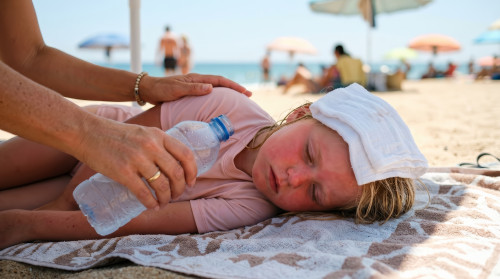
High temperatures, direct sunlight and physical activity can increase the risk of heat-related illness. Infants and young children should be closely monitored, as they may not be able to recognize or communicate symptoms of heat-related illness.
| Heat Exhaustion | Heat Stroke |
|---|---|
| Heavy sweating | Confusion |
| Headache | Loss of consciousness |
| Dizziness or nausea | Very high body temperature |
| Weakness or muscle cramps | Hot skin |
| Cool, clammy skin | Seizures |
If someone develops heat exhaustion, move them to a shaded or air-conditioned area, encourage hydration and allow them to rest.
Call 911 immediately if heat stroke is suspected.
When Should You Seek Medical Care After a Beach Injury or Illness?
Key Takeaway: It is always better to seek medical guidance if symptoms are severe, worsening or causing concern.
Many beach-related health issues can be managed with basic first aid. However, some situations require prompt medical evaluation.
Seek medical care if:
- A wound is deep or won't stop bleeding
- Signs of infection develop
- A child appears severely dehydrated
- Symptoms of heat illness do not improve
- Sunburn causes severe blistering
- A jellyfish sting triggers widespread symptoms
- Someone experiences difficulty breathing, confusion or loss of consciousness
Trust your instincts as a parent. If something doesn't seem right, don't hesitate to contact a healthcare professional.
What Is My Best Advice for a Safe Day at the Beach?
Key Takeaway: The safest beach days begin before you leave home. Packing thoughtfully, staying aware of your surroundings and supervising children closely can help prevent many common injuries and illnesses.
A beach day should be fun, not stressful. By bringing water, sunscreen, protective clothing, snacks and basic first aid supplies, families can significantly reduce many common health risks.
Most importantly, stay present. Paying attention to changing weather, ocean conditions and how family members are feeling throughout the day can help ensure everyone gets home safely.
With a little preparation, your family can enjoy everything Southern California beaches have to offer while staying healthy all summer long.
Frequently Asked Questions About Beach Safety
Water, sunscreen, hats, sunglasses, snacks, towels, shade equipment and a basic first aid kit are among the most important items.
Most sunscreens should be reapplied every two hours and after swimming or excessive sweating.
A broad-spectrum sunscreen with SPF 30 or higher is generally recommended.
Look for signs such as dry mouth, headache, fatigue, irritability and decreased urination.
Yes. Lifeguards provide an additional layer of safety and can respond quickly if emergencies occur.
Stay calm, swim parallel to shore and signal for help if needed. It’s important to check if rip currents are forecasted for the beach you are planning to visit, so you can plan to stay out of the water.
Bandages, antiseptic wipes, gauze, medical tape, tweezers, aloe vera and other basic first aid supplies.
Heat exhaustion causes symptoms such as sweating, dizziness and weakness, while heat stroke can cause confusion, loss of consciousness and dangerously high body temperatures.
Seek care for severe injuries, worsening symptoms, signs of infection, breathing difficulties or any situation that raises concern.
Maintain active supervision of children at all times, especially in and around the water.