Published on Oct. 12, 2026
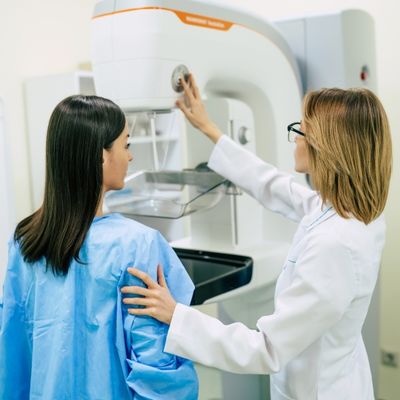
According to the American Cancer Society, breast cancer remains the most commonly diagnosed cancer among women, but survival rates are at an all-time high. The silver lining is that more diagnoses also reflect experts’ ability to detect breast cancer sooner — even at stage zero — when it is most treatable and curable. When found before it has spread outside the breast, the five-year relative survival rate is greater than 99%.
“Screening mammography is one of the most important tools we have for detecting breast cancer,” says Gary Levine, M.D., medical director, MemorialCare Breast Centers. “Technology has advanced significantly in my career. Today, we use technology that supports more accurate breast positioning during mammography, helping ensure the clearest image possible. Combined with MemorialCare’s dedicated breast radiologists, who specialize exclusively in reading breast images, this helps provide an elite level of breast cancer detection accuracy in Southern California.”
As the largest provider of breast screening in Orange County and South Los Angeles County, MemorialCare Breast Centers offer advanced screening, diagnostic and treatment care at nine locations from Long Beach to South Orange County. MemorialCare Breast Centers are designated Breast Imaging Centers of Excellence and are the only centers in the region that can guarantee dedicated breast radiologists interpret every breast image.
Should cancer treatment be needed, MemorialCare Cancer Institute also has specialty breast surgeons and breast medical oncologists focused exclusively on breast cancer diagnosis and treatment.
MemorialCare Breast Centers offer advanced breast imaging, including 3D mammography, high-resolution breast ultrasound, breast MRI, contrast-enhanced mammography and image-guided diagnostic procedures. Three-dimensional mammography creates detailed breast images and may improve cancer detection — particularly in women with dense breast tissue — while reducing unnecessary callbacks.
For women with dense breasts, MemorialCare Breast Centers also offer breast MRI for a more detailed look.
“Dense breast tissue appears white on a mammogram, and many breast cancers can appear white too, making them harder to see,” says Richard Reitherman, M.D., medical director, breast imaging, MemorialCare Breast Center, Orange Coast Medical Center. “MRI doesn’t rely on cancer looking different from dense tissue. With contrast, areas with increased blood flow, such as many breast cancers, ‘light up,’ making them easier to detect in dense breasts.”
That same principle — using contrast to highlight suspicious areas — is also used in contrast-enhanced mammography, which uses a contrast agent to show areas of increased blood flow that may be associated with breast cancer. For some patients who need enhanced imaging but cannot undergo an MRI, it may provide an alternative when clinically appropriate.
MemorialCare Breast Center physicians also now offer advanced breast arterial calcification (BAC) scoring as an additional health assessment performed during mammography.
“Breast arterial calcifications are calcium deposits in the arteries of the breast that may provide information about cardiovascular risk,” says Maya Sardjono, M.D., medical director, breast imaging, MemorialCare Breast Center, Long Beach Medical Center. “BAC scoring does not replace a formal cardiac evaluation, but it can encourage important conversations with a primary care physician about heart health and preventive care.”
With advanced technology and dedicated breast experts, MemorialCare helps women take a more informed, confident approach to breast health.
Medically Reviewed by:
Gary Levine, M.D., medical director, MemorialCare Breast Centers
Maya Sardjono, M.D., medical director, breast imaging, MemorialCare Breast Center, Long Beach Medical Center
Richard Reitherman, M.D., medical director, breast imaging, MemorialCare Breast Center, Orange Coast Medical Center
About the Experts:
Gary Levine, M.D., is Medical Director of MemorialCare Breast Centers and a nationally recognized breast imaging specialist with decades of experience advancing breast cancer detection and treatment. A leader in the field, he has held prominent national leadership roles, lectures internationally, and is considered a pioneer in breast tumor cryoablation and digital breast tomosynthesis.
Maya Sardjono, M.D., is Medical Director of Breast Imaging at the MemorialCare Breast Center at Long Beach Medical Center, where she focuses on the early detection and diagnosis of breast cancer. A board-certified radiologist, she completed advanced training in breast imaging at the University of California, Irvine after earning her medical degree from the Keck School of Medicine at USC.
Richard Reitherman, M.D., is Medical Director of Breast Imaging at the MemorialCare Breast Center at Orange Coast Medical Center and a nationally recognized leader in breast imaging. With more than two decades of experience, he specializes in advanced breast imaging technologies, including MRI, and has helped shape the field through clinical innovation and expertise.