Published on June 26, 2026
Updated on Sept. 16, 2026

In the United States, about 42 out of 100 men will develop cancer in their lifetime, according to the American Cancer Society. That means nearly half of all men will face a cancer diagnosis at some point in their lives. Yet many men put off screening or delay seeing a doctor when they feel fine. As physicians, we know that when cancer is found earlier, it is often more treatable. That is why early detection and regular screening are so important.
Much of that conversation centers on prostate, lung and colorectal cancers, which continue to shape the cancer burden for men. But they are not the whole story.
Bladder cancer and melanoma also affect many men, and some of their earliest warning signs can be subtle enough to ignore.
Why It Matters
The broader message is not simply to raise awareness. It is to help men understand risk, recognize when screening may be needed and know that timely follow-up can make a meaningful difference.
At MemorialCare Todd Cancer Institute at Long Beach Medical Center, that approach begins with coordinated screening, diagnostic evaluation and treatment planning designed to move patients more quickly from concern to answers.
Why Men’s Cancer Rates Are High
Risk rises with age, and men older than 65 are expected to see the largest increase in diagnoses in the years ahead.
Several factors help explain why cancer continues to take a heavy toll on men, such as:
- Men are more likely to smoke and/or drink alcohol
- Men tend to work in environments with exposure to carcinogens
- Men are more likely to delay their care, due to cultural norms or expectations, such as physical and mental toughness and can work through ailments on their own
Together, those patterns can raise risk and, just as important, postpone the screenings and evaluations that often lead to earlier diagnosis.
The Cancers Driving the Conversation
For many men, that reality comes into focus through three cancers in particular: prostate, lung and colorectal. Each follows a different path, but all three show the same pattern. When cancer is found earlier, treatment options are often broader and outcomes are often better.
Prostate Cancer: When to Start the Conversation
Prostate cancer often enters the conversation first because it is the most common cancer among men in the United States, with about 1 in 8 men diagnosed during their lifetime. What is unique about prostate cancer screening is that it’s not a one-size-fits-all decision.
The U.S. Preventive Services Task Force recommends that men ages 55 to 69 talk with their physician about whether screening is right for them, but that conversation may happen earlier when family history or other risk factors are involved.
Men who are Black, have African ancestry or have a father, brother or son with a history of prostate cancer may be advised to begin screening as early as age 40.
Today, screening most often begins with a simple prostate-specific antigen (PSA) blood test. The test can help determine whether additional evaluation, such as imaging or a biopsy, is needed. That matters because prostate cancer is often highly manageable when it is found early.
Men should also talk with their physician if they notice symptoms such as:
- Difficulty starting urination
- A weak urine stream
- Frequent urination
- Blood in the urine or semen
- Pain with urination or ejaculation
- Persistent pain in the back, hips or pelvis
If prostate cancer is diagnosed, treatment at MemorialCare Todd Cancer Institute may include active surveillance, brachytherapy, chemotherapy, hormone therapy, radiation therapy or robotic-assisted laparoscopic surgery, depending on the stage and behavior of the disease.
Lung Cancer: Screening Before Symptoms Appear
Lung cancer tells a different but equally urgent story. It remains the leading cause of cancer death, with more people dying from lung cancer than from colon, breast and prostate cancers combined, according to the American Cancer Society.
One reason is that symptoms often do not appear until the disease is more advanced. For adults ages 50 to 80 who currently smoke or quit within the past 15 years and have a heavy smoking history, annual low-dose CT screening may help detect abnormalities earlier, when treatment can be more effective.
At Long Beach Medical Center, the Lung Screening Program combines annual low-dose CT screening with close clinical navigation to help identify concerning changes before symptoms appear. If a small lung nodule is found, physicians follow the American College of Radiology’s Lung-RADS guidelines to determine whether it can be safely monitored with routine imaging based on its size, appearance and any changes over time. When a nodule grows or becomes more concerning, additional diagnostic evaluation may be needed.
For those more concerning findings, the Galaxy System can help physicians more precisely reach and biopsy small, hard-to-access lung nodules. The FDA-cleared technology combines robotic bronchoscopy with real-time imaging, helping care teams move quickly from concern to answers when further evaluation is needed. As the first hospital in the greater Long Beach region to offer this technology, Long Beach Medical Center gives patients access to advanced, academic-level lung diagnostics close to home.
Colorectal Cancer: Why Colonoscopy Still Matters
Colorectal cancer reflects another shift in the men’s health conversation, especially as diagnoses have drawn more attention in younger adults. Colorectal cancer incidence is rising by about 3% per year among adults ages 20 to 49, underscoring why routine screening now begins at age 45 for adults at average risk.
A colonoscopy, typically recommended every 10 years for average-risk adults, remains the most common and effective screening test because it can detect cancer and remove precancerous polyps during the same procedure. For people at higher risk, screening may begin earlier or be recommended more often.
Other colorectal cancer screening options may include:
- CT colonography, or virtual colonoscopy: Uses CT imaging to create detailed pictures of the colon.
- Flexible sigmoidoscopy: Looks at the lower part of the colon and is typically less invasive than a colonoscopy.
- Stool-based tests: Check a stool sample for hidden blood or other changes that may signal cancer. Some can be completed at home, but they cannot find or remove polyps.
These options can be more convenient for some patients, but they do not replace the preventive benefit of a colonoscopy because they cannot remove polyps. If a non-colonoscopy screening test shows an abnormal result, a follow-up colonoscopy is still needed.
While colonoscopy remains the gold standard for colorectal cancer screening, the best screening is the one that gets done. For men who are hesitant to schedule a colonoscopy, choosing another recommended screening option is still better than delaying screening altogether. The most important step is talking with a physician about personal risk, family history and which screening approach is the right fit.
At MemorialCare Todd Cancer Institute, physicians stress that a timely colonoscopy can help prevent cancer by finding and removing polyps before they become dangerous, giving patients an important head start if treatment is needed.
Other Warning Signs Men Should Not Ignore
Bladder cancer and melanoma also remain part of the men’s health picture, even if they receive less attention than prostate, lung and colorectal cancer.
Unlike prostate, lung or colorectal cancer, there is no routine screening test recommended for bladder cancer in adults at average risk. For men, the key is not to ignore symptoms that may point to a bladder or urinary tract concern, especially because bladder cancer is more common in men and can sometimes be found early when symptoms are evaluated promptly. Men should talk with their physician if they notice:
- Blood in the urine, which may appear pink, red or cola-colored
- Pain or burning with urination
- Urinating more often than usual
- Feeling an urgent need to urinate, even when the bladder is not full
- Difficulty urinating or a weak urine stream
For melanoma, early detection often begins with routine skin checks at home and full-body skin exams with a dermatologist, especially for men with a personal or family history of skin cancer, a history of significant sun exposure or many unusual moles.
Melanoma is the most serious form of skin cancer because it is more likely to spread to other parts of the body, but it is also highly treatable when found early. Men should talk with their physician or dermatologist if they notice a new or changing mole, sore that does not heal or a spot that looks different from the others.
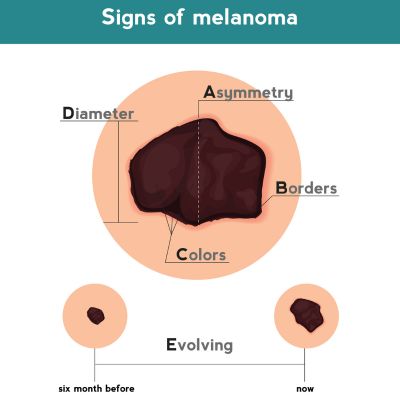
A helpful way to remember melanoma warning signs is the ABCDE rule:
- Asymmetry: One half of the mole or spot does not match the other half
- Border: The edges are irregular, jagged or blurred
- Color: The color is uneven or includes different shades of brown, black, pink, red, white or blue
- Diameter: The spot is larger than 6 millimeters, about the size of a pencil eraser, though melanomas can be smaller
- Evolving: The mole or spot is changing in size, shape, color or symptoms, such as itching, tenderness or bleeding
When screening does uncover a concern, the next step is timely evaluation. Depending on the findings, that may include imaging, biopsy and specialty consultation to confirm a diagnosis and determine whether treatment is needed.
Should the Need Arise
If a screening or symptom evaluation leads to a cancer diagnosis, MemorialCare Todd Cancer Institute offers comprehensive, coordinated care designed to support patients and families through every step of the journey. Multidisciplinary teams of oncologists, surgeons, nurses, social workers and other specialists work together to tailor care plans around each patient’s diagnosis, treatment goals and quality of life. From prevention and early detection to advanced treatment, clinical trials, supportive services and survivorship resources, the focus is on treating the whole person—not just the disease—while giving patients access to high-quality cancer care close to home.
Take the First Step
Schedule an appointment with your physician and talk about the screening plan that makes the most sense for your age, family history and personal risk. Whether that conversation leads to a PSA blood test, a low-dose CT scan, a colonoscopy or simply a better understanding of what to watch for, taking that first step now can make all the difference later.
Medically Reviewed By:
Nilesh Vora, M.D., medical director, MemorialCare Todd Cancer Institute, Long Beach Medical Center
About the Author
Nilesh Vora, M.D., is a board-certified hematologist and medical oncologist who serves as medical director of MemorialCare Todd Cancer Institute at Long Beach Medical Center and Chair of Hematology and Medical Oncology for MemorialCare Medical Foundation. He specializes in lung cancer, gastrointestinal cancers, including colorectal, pancreatic and gastric cancers, and malignant hematology disorders. Dr. Vora completed his medical degree at Keck School of Medicine of USC, residency at Harbor-UCLA Medical Center and fellowship in hematology and oncology at City of Hope. He also helps lead clinical trial offerings, giving patients access to advanced cancer care close to home.
