Published on Nov. 24, 2026
A non-smoker his entire life, Dr. Thomas Vovan wouldn’t think to request a lung cancer screening. An emergency department visit for a virus revealed what was hiding in his lung.
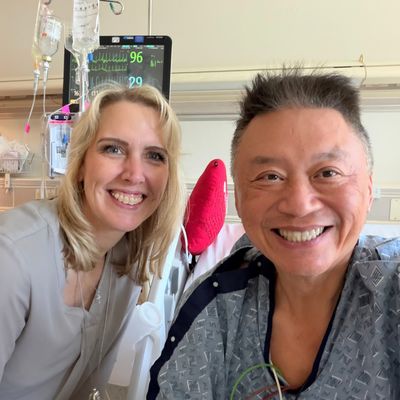
Thomas Vovan, M.D., a medical director of critical care pulmonary and critical care services at MemorialCare Saddleback Medical Center, has spent his entire career caring for patients with serious lung disease. What he never expected was that one day he would become the patient.
Dr. Vovan, 60, had never smoked and felt very healthy overall. Due to his non-smoking status, he wouldn’t even think of asking for a lung screening. As a physician, he knew that only smokers or former smokers qualify under current guidelines. Current U.S. Preventive Services Task Force guidelines recommend annual CT screening for adults ages 50 to 80 who have at least a 20 pack-year smoking history and currently smoke or quit within the past 15 years.
So, when Dr. Vovan’s girlfriend had a viral infection, he wasn’t surprised when he started developing symptoms himself. Shortly after she scheduled a doctor’s appointment to get treated, Dr. Vovan began having difficulty breathing. He wasn’t concerned; he just thought it was a very bad chest cold.
After about a week, and some prodding from his girlfriend, he decided to see a doctor. He thought about making an appointment with one of his doctors or going to urgent care, but because he was having trouble breathing, he went to the emergency department (ED) at MemorialCare Saddleback Medical Center.
His symptoms were severe enough that the care team ordered a CT scan to see what was happening in his lungs. While a viral illness was confirmed, something else was revealed on the image that nobody expected: a shadow in his lung.
“If I didn’t go to the ED and get that scan, I wouldn’t have known it was there,” Dr. Vovan said.
A physician accustomed to reviewing other people’s scans was suddenly the patient with an unexpected finding on his own scan.
A Shadow That Did Not Disappear
A lung nodule can often appear as a “shadow” on an imaging study, but it does not automatically mean cancer. In fact, most nodules are not cancer.
The American Thoracic Society says lung nodules can be found in up to half of adults who undergo chest X-rays or CT scans, and fewer than 5% of all lung nodules turn out to be cancer. They can result from scar tissue, a previous infection or other noncancerous causes.
Those odds were reassuring, especially since he had no history of smoking, but they did not mean Dr. Vovan could ignore what appeared on his scan.
According to a study published by the American College of Chest Physicians (CHEST), researchers followed more than 23,000 people whose lung scans, done for reasons unrelated to routine lung cancer screening, happened to show a lung nodule larger than 8 millimeters. Within 27 months, 9.9% of them were diagnosed with lung cancer. Even among people who had never smoked, 5.4% were diagnosed with lung cancer. That is why a nodule found on, calls for follow-up, not a shrug.
“The initial recommendation was to watch the abnormality and repeat imaging in six months,” Dr. Vovan said. “I continued living my life in the meantime, including traveling. I felt well, and there were plenty of reasons to believe it would amount to nothing.”
Six months later, he went to the MemorialCare Lung Screening Program at Saddleback Medical Center for the repeat scan. The program is built around low-dose CT, a quick, noninvasive exam that delivers less radiation than a standard chest CT while still producing detailed images of the lungs.
Physicians evaluating a lung nodule consider its size, appearance and density, and a nodule that persists or grows can warrant a closer look. Comparing one scan against the next is central to the Lung Screening Program, where MemorialCare thoracic specialists determine which nodules can continue to be monitored and which deserve closer evaluation. Throughout, dedicated nurse navigators coordinate follow-up and answer patients’ questions as results come in.
“Even though Dr. Vovan is a physician here at Saddleback Medical Center, he needed similar guidance as any patient,” said Sherri Hoag, RN, lung nurse navigator, MemorialCare Saddleback Medical Center. “Our role is to make sure the follow-up scan gets scheduled, completed and that the results are shared with the patient and their care team. Knowing the system doesn’t replace having someone to help navigate it when you’re the one with the finding.”
For Dr. Vovan, that second scan led to a closer evaluation. That evaluation meant a biopsy, a decision he and his care team made and the next step the program helps coordinate.
From watching to knowing
A biopsy can provide the tissue needed to determine whether a suspicious lung abnormality is cancerous.
At MemorialCare, some patients with suspicious lung nodules can undergo robotic-assisted bronchoscopy, which helps pulmonologists navigate through the airways to reach small or difficult-to-access nodules.
“I had my biopsy at Saddleback Medical Center, and I felt great afterward. Looking back, it says a lot about how hard it is to stop being the doctor. Even as the patient, I wanted to follow every step of my own care and understand exactly what the team was seeing.”
- Dr. Vovan
“I approached Dr. Vovan’s biopsy carefully, with the goal of getting a clear diagnosis at the lowest possible risk,” said Amir Ronaghi, M.D., interventional radiologist, MemorialCare Saddleback Medical Center. “I reviewed his imaging to map out the safest path to the nodule. Using imaging to guide us, we took small tissue samples from the nodule and sent them to a pathologist.”
The biopsy confirmed stage 0 lung cancer, the earliest stage. At stage 0, abnormal cells are confined to the inner lining of the airway. They have not grown into deeper lung tissue or spread to lymph nodes or other parts of the body.
From Diagnosis to a Treatment Team
A biopsy answers one question: what is it? The next question is what to do about it, and that is where the diagnostic team hands off to the cancer team. Once the diagnosis was confirmed, Dr. Vovan’s results moved to the MemorialCare Cancer Institute at Saddleback Medical Center, where an oncologist joined the physicians already following his case. Nurse navigators help keep that handoff connected so patients do not have to carry findings from one specialist to the next.
Finding the cancer at stage 0 gave Dr. Vovan more treatment options than many patients have at diagnosis.
“Many patients with lung cancer are diagnosed after the disease has progressed, when treatment options are more limited,” said Howard Cheng, M.D., oncologist, MemorialCare Cancer Institute, Saddleback Medical Center.
The diagnosis was surprising for someone who never smoked, but Dr. Vovan also understood what early detection meant: the cancer had been caught when treatment could be most effective.
“When I got the diagnosis, I had to remind myself that this time I was the patient, not the doctor,” said Dr. Vovan. “I sat down with my care team, and together we built the best plan for me and my health goals. That’s what I’d tell anyone facing this: once something is caught, partner with your doctors. It’s the best way to treat the cancer as effectively as possible.”
The plan Dr. Vovan and Dr. Cheng settled on was surgery.
“At this stage, removing the cancer offered the best chance for cure,” Dr. Cheng said. “We ordered a PET scan to confirm there were no signs the cancer had spread, then planned a minimally invasive lobectomy to remove the affected lobe of his lung. After surgery, we follow him with regular CT scans to monitor his lungs.”
From Diagnosis to Surgery in Days
At MemorialCare Cancer Institute, pulmonology, radiology, thoracic surgery, medical oncology, radiation oncology and specialty nursing collaborate to develop an individualized treatment plan.
For Dr. Vovan, the timeline moved rapidly.
After receiving his diagnosis, he had a PET scan on a Monday to evaluate whether there were signs the cancer had spread. By Wednesday, he had surgery.
“Even knowing exactly what a cancer diagnosis could mean, my physician instincts didn’t just switch off,” Dr. Vovan said. “I almost postponed the surgery because I was on call at Saddleback Medical Center that week. My work and my patients meant the world to me, and it was hard to think about stepping away from them. But this time, I had to let my care team take care of me.”
Dr. Vovan underwent a video-assisted thoracic surgery (VATS) lobectomy, a minimally invasive operation to remove the affected lobe of the lung.
“Instead of opening the chest and spreading the ribs, we work through a few small incisions using a thin camera and long instruments, which generally means less trauma to the chest wall and a faster recovery,” said Ledford Powell, M.D., thoracic surgeon, MemorialCare Saddleback Medical Center. “Dr. Vovan’s case was not suited for robotic surgery, and that’s an important point about highly specialized cancer care: the right approach is not necessarily the newest approach, but the one best suited to the individual patient’s anatomy, tumor and clinical circumstances.”
Dr. Vovan never seriously considered going elsewhere for his surgery or his overall care.
He has professional ties throughout Southern California, including a background working within an academic institution, and his brother works at a different area hospital. But Saddleback Medical Center was where he wanted to be.
“Saddleback Medical Center treats every patient like family, and that’s the secret sauce at MemorialCare. No patient is treated as a stranger or a number. Each one is treated as if they’re a member of the care team’s own family. I’ve seen it as a physician, and now I’ve seen it as a patient.”
- Dr. Vovan
He knew the nurses who would care for him. He knew the physicians. He knew the culture of the hospital, not simply from working inside it, but from seeing how its teams cared for patients every day.
Recovery Doesn’t Come with a Shortcut

Dr. Vovan felt so good after surgery that he quickly became restless. Two days after having a lobe of his lung removed, he wanted to go home. His care team had other ideas.
“Recovery doesn’t come with a shortcut, even for a physician,” said Dr. Powell. “We encouraged Dr. Vovan to stay and heal rather than lean on his medical knowledge to move things along. He has spent years counseling patients, and this time he had to listen to his own nurses and physicians. It was quite the role reversal.”
And soon, Dr. Vovan had another goal: getting back to work.
His own medical practice, patients, nurses and partners were waiting. Returning was not simply a professional obligation. It gave him a sense of purpose. He returned to work and, before long, resumed traveling as well. Cancer had disrupted his life, but he was not willing to let it define what came next.
The Scan that Changed Everything
Today, Dr. Vovan is doing well and continues follow-up surveillance, including CT imaging, to monitor his lung health.
“As his oncologist and his friend, I am grateful that we found Dr. Vovan’s cancer when we did,” said Dr. Cheng.
“If you smoke or have a significant smoking history, get screened,” Dr. Vovan said. “Finding lung cancer early gives you the best chance at a cure.”
Not sure whether lung screening is right for you? Take a health risk assessment to find out if you qualify and talk with your doctor about your results.
Medically Reviewed By
Ledford Powell, M.D., thoracic surgeon, MemorialCare Saddleback Medical Center
Howard Cheng, M.D., oncologist, MemorialCare Cancer Institute, Saddleback Medical Center
Amir Ronaghi, M.D., interventional radiologist, MemorialCare Saddleback Medical Center
About the Expert
Ledford Powell, M.D., is a thoracic surgeon at MemorialCare Saddleback Medical Center and a diplomate of the American Board of Thoracic Surgery with a special interest in thoracic oncology and minimally invasive lung surgery. His practice covers benign and malignant thoracic disease, including video-assisted thoracoscopic surgery (VATS), with a focus on early detection of lung cancer and surgical management of advanced lung cancers.
Howard Cheng, M.D., is a board-certified hematologist and medical oncologist with the MemorialCare Cancer Institute at Saddleback Medical Center, with more than 30 years of experience treating cancers and blood disorders. A graduate of Yale University School of Medicine, he completed his internal medicine residency and hematology and oncology fellowship at UCLA Medical Center.
Amir Ronaghi, M.D., is an interventional radiologist at MemorialCare Saddleback Medical Center with a Certificate of Added Qualification in Vascular and Interventional Radiology and specialty interests in oncological imaging and intervention and peripheral vascular imaging and intervention. A graduate of the University of California San Diego School of Medicine, he completed his diagnostic radiology residency and vascular and interventional radiology fellowship at UCLA Medical Center.
