Published on Nov. 19, 2026
Anal cancer is often dismissed as rare. But as a colorectal surgeon serving communities across the greater Long Beach region, I am alarmed by how often I diagnose it late, in people from all walks of life.
And it is growing: Since 2000, U.S. deaths from anal cancer have roughly doubled, according to the National Cancer Institute. Most people connect HPV with cervical cancer, but the virus also causes about 9 in 10 anal cancers.
Few people know that precancerous changes in the anal canal can be found and treated before cancer develops. Risk is higher for people living with HIV, gay and bisexual men, and people with persistent high-risk HPV, a history of anal dysplasia, prior HPV-related cancers or long-term immunosuppression.
Symptoms Shouldn’t Be Ignored
In close-knit communities, people readily talk with their doctors about many health concerns, but conversations about bowel changes or anal health can still feel uncomfortable. Embarrassment should never keep someone from getting checked.
The same goes for symptoms. New or persistent rectal bleeding, pain, itching, pressure or a lump near the anus should be evaluated, not brushed off.
Screening Can Find Changes Before Cancer Develops
I support everyone getting an anal Pap test, especially people in those high-risk categories. It is much easier than a cervical Pap smear, using a soft swab rather than a speculum, and any primary care physician or OB-GYN should offer it.
While an anal Pap test can flag abnormal cells, it does not show where those cells are located.
That is where high-resolution anoscopy can help.
What Is High-Resolution Anoscopy?
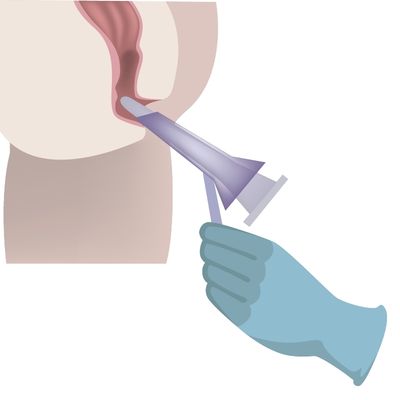
Using magnification, bright illumination and special solutions, a colorectal specialist examines the anal canal and lower rectum to identify abnormal areas that may not be visible during a routine exam, including HPV-related precancerous changes and early signs of anal cancer. If abnormal tissue is found, a biopsy is taken during the same procedure, allowing the physician to test and diagnose in one visit.
Advanced Diagnostic Care Close to Home
MemorialCare Long Beach Medical Center is one of only a few locations in the region offering high-resolution anoscopy. For residents of Los Alamitos, Rossmoor, Cypress, La Palma, El Dorado Park Estates and surrounding beach communities, that means access to advanced diagnostics close to home rather than traveling farther for care.
If a biopsy identifies precancerous changes or cancer, patients are connected with the MemorialCare Todd Cancer Institute multidisciplinary team so they can move on to treatment without being referred elsewhere.
Know Your Risk and Talk With Your Doctor
Do not wait for symptoms. If you are in a higher-risk group, ask your doctor about an anal Pap test and whether high-resolution anoscopy is right for you.
Scan to learn more or call (844) 635-2774.
Medically Reviewed By
Ketan Thanki, M.D., colorectal surgeon, MemorialCare Todd Cancer Institute, Long Beach Medical Center
About the Expert
Ketan K. Thanki, M.D., is a fellowship-trained, board-certified colorectal surgeon at the MemorialCare Todd Cancer Institute at Long Beach Medical Center, specializing in benign and malignant diseases of the colon, rectum and anus. His expertise includes colorectal and anal cancers, inflammatory bowel disease, pelvic floor disorders and other complex colorectal conditions.